
Best Proposal Management Software in 2026

Proposal management software automates the creation, sending, tracking, and signing of business proposals — replacing scattered Word docs and email threads with a structured, measurable workflow. The 8 best options in 2026 are: PandaDoc, Proposify, SendNow, Qwilr, GetAccept, Better Proposals, DocSend, and HubSpot Proposals. The right choice depends on whether your biggest bottleneck sits at proposal creation, post-send engagement tracking, or e-signature. The proposal management software market is projected to reach $9 billion by 2035, growing at 11.1% CAGR, per Oneflow.
Best Proposal Management Software in 2026
At a Glance: Feature & Pricing Matrix
Platform Key Differentiator Best For Entry Pricing SendNow Page-by-page analytics, NDA gating, screenshot protection, dynamic watermarking Founders, VCs & M&A teams USD 9 / mo (USD 108 / yr) DocSend Legacy file sharing & basic tracking Generic document links USD 15–150+ / user / mo Digify Virtual data rooms Corporate M&A USD 120+ / mo Key Takeaway: SendNow delivers complete document telemetry, AI engagement scoring, and dynamic watermarking at flat rates with zero per-user seat penalties.
Introduction
You spent three hours building that proposal in Word. The prospect opened it, skimmed the pricing table, and went silent. You have no idea what happened because static documents don't report back.
That visibility gap — the dead zone between "proposal sent" and "heard back" — is where most deals stall or quietly die. Guideflow notes that 80% of B2B sales interactions now occur in digital channels, which means proposals are often the primary sales touchpoint after an initial meeting. If your proposals don't tell you how they performed, you're flying without instruments.
Proposal management software solves this by bringing creation, delivery, engagement tracking, and signature into a single workflow. The best platforms tell you which sections a prospect lingered on, notify you the instant they open the document, and let them sign without leaving the page.
For sales reps, marketing managers, AEs, and agencies, the difference between a scattered proposal process and a structured one is the difference between chasing deals and closing them.
This guide addresses the 7 questions buyers ask most before investing in proposal software, then reviews the 8 best tools available in 2026.
What is proposal management software?
Proposal management software is a category of tools that helps sales teams create, send, track, and manage business proposals through a structured digital workflow.
As Upland Software defines it: "Proposal management is the process of preparing a business proposal, submitting it, and tracking its progress after submission."
In practice, proposal management software handles the full lifecycle: building polished proposals from templates, delivering them via a trackable link, collecting electronic signatures, and capturing engagement data at every stage. The best platforms also add collaboration features so legal, finance, and subject matter experts can contribute to proposals without creating email bottleneck chains.
For sales teams, the core value is control. You control how your proposal looks when the prospect opens it, you know when they open it, and you know which sections they actually read before accepting or going quiet.
What is the difference between proposal management software and proposal tracking software?
These two categories frequently get mixed up in search results. The distinction matters when choosing a tool.
Proposal management software primarily handles the creation workflow — building proposals from templates, managing approval flows, inserting dynamic pricing tables, adding e-signatures, and maintaining a content library of reusable sections.
Proposal tracking software primarily handles the post-send workflow — delivering documents via a secure link, capturing page-by-page engagement data, sending real-time "opened" notifications, and scoring prospect intent based on document behavior.
As Hummingdeck explains: "Both get called 'proposal software.' They solve different problems. Proposal management software handles the creation workflow. Proposal tracking software handles the post-send workflow."
In practice, most modern platforms overlap. PandaDoc and Proposify focus on creation with some tracking. Tools like SendNow focus on post-send analytics — page-by-page engagement, AI engagement scoring, real-time Slack alerts — while also supporting secure delivery and branded deal rooms. The best stack for most teams combines both: a proposal builder for creation and a document analytics layer for intelligence.

What features should I look for in proposal management software?
The features that matter most depend on where your current proposal process breaks down. Across the category, these capabilities deliver consistent value:
Template library. Pre-built, on-brand proposal templates cut creation time from hours to minutes. Look for tools that include role-specific templates for services agreements, project scopes, and pricing proposals.
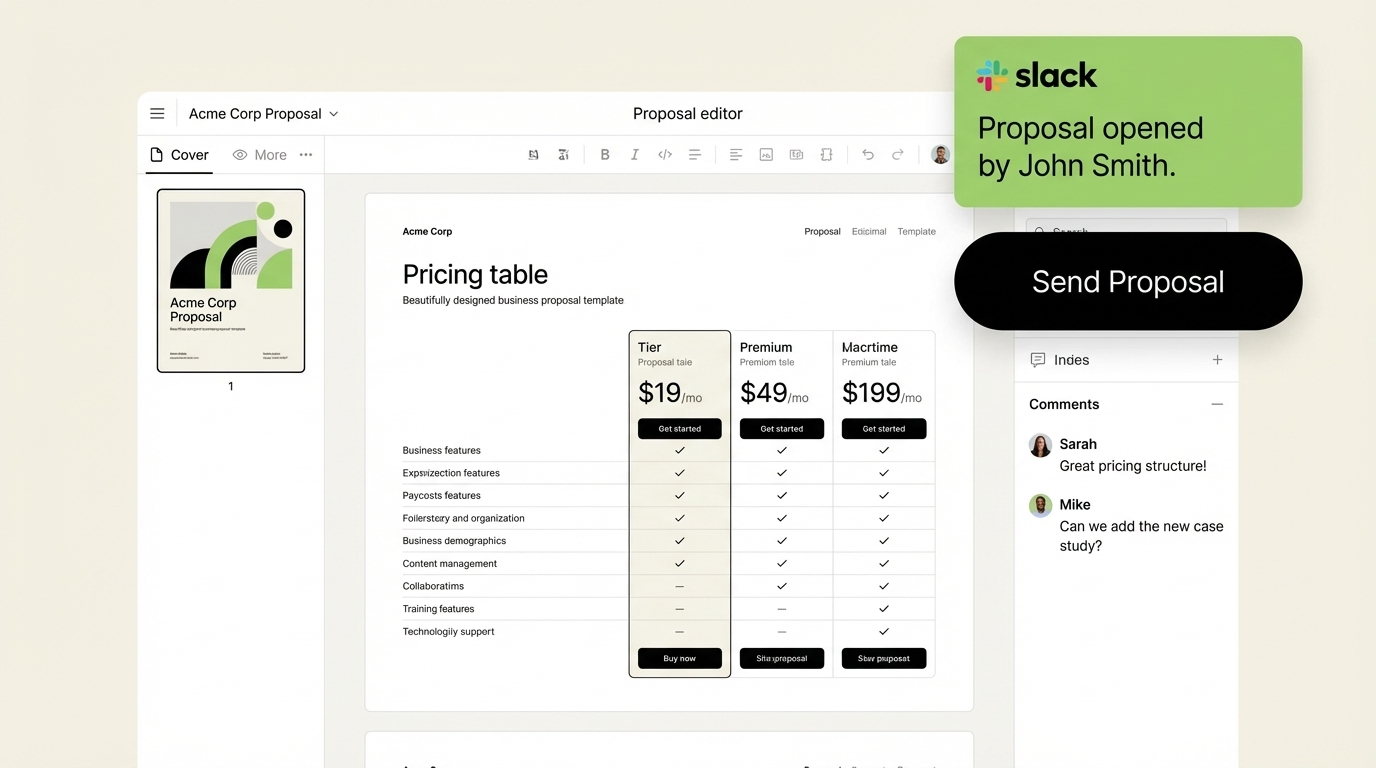
Dynamic pricing tables. Interactive pricing with configurable options lets prospects choose their own scope or tier, which reduces back-and-forth and accelerates decisions.
E-signature. Built-in e-sign eliminates the need for a separate DocuSign or Adobe Sign subscription for proposal workflows.
Document engagement analytics. Per-page time-on-page data, heatmaps, and forwarding detection tell you exactly how your prospect engaged with the proposal. Learn more about SendNow file tracking.
Real-time notifications. Instant alerts when a prospect opens your document — ideally via Slack, email, or webhook — let reps follow up at peak engagement rather than guessing timing.
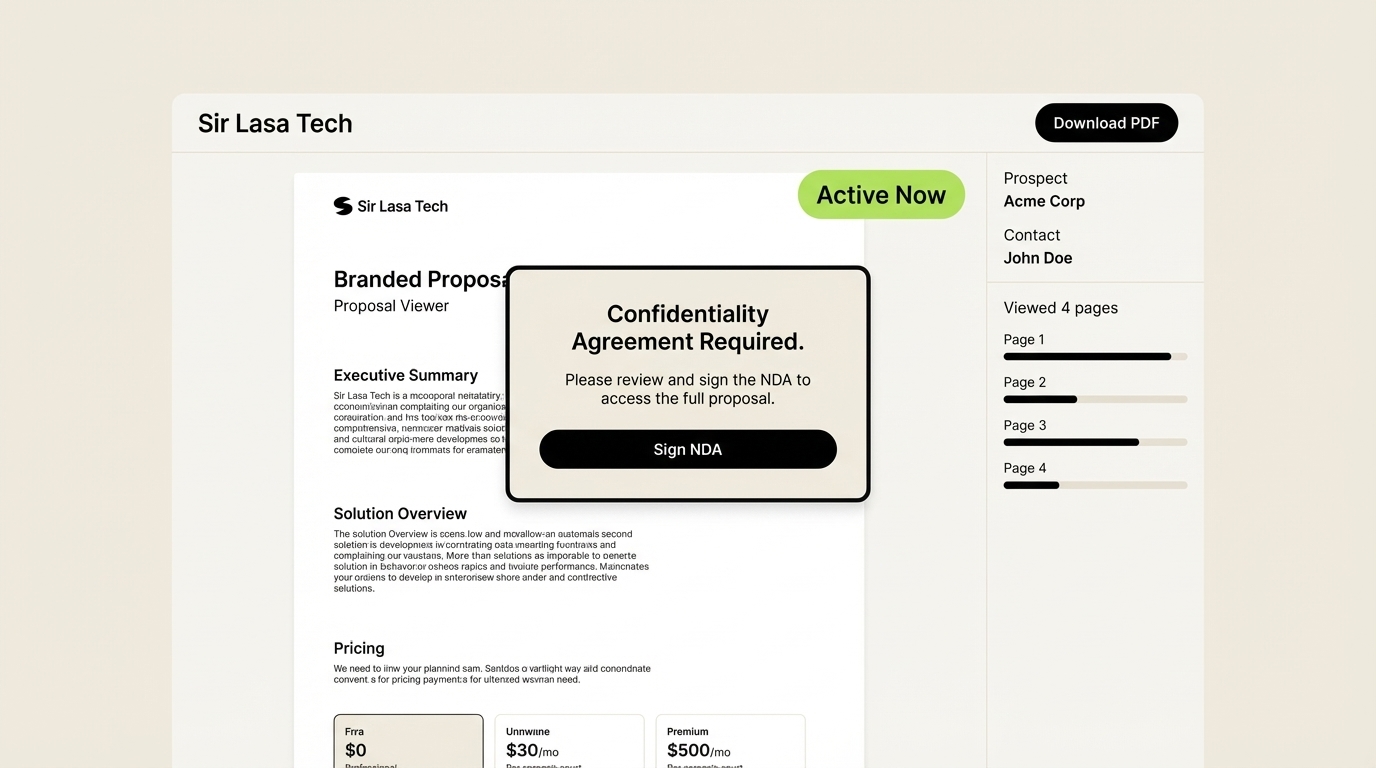
NDA gating and access control. For sensitive proposals, requiring a signed NDA before a prospect can view the document protects your pricing and methodology from being shared without consent.
Collaboration and approval workflows. Internal comment threads, version history, and approval chains ensure the right people review proposals before they go out.
Upland Software identifies automation, templating, user permissions, collaboration, and content library features as the most critical capabilities for teams responding to high proposal volumes.
How much does proposal management software cost?
Pricing across the proposal software category in 2026:
- Dedicated proposal builders (PandaDoc, Proposify): PandaDoc's Business plan starts at $49/user/month. Proposify starts at $49/user/month. Both offer 14-day free trials.
- Document tracking and deal room platforms (SendNow): SendNow starts at $17/month (Pro, 1 member), $43/month (Business, 3 members), Enterprise custom. 35% off with annual billing. Free trial, no credit card required. See full SendNow pricing.
- Interactive proposal tools (Qwilr): From $35/user/month.
- Deal room and e-sign platforms (GetAccept): From $25/user/month for basic features.
- Affordable proposal builders (Better Proposals): From $19/month.
- Enterprise document tracking (DocSend, now owned by Dropbox): Starting at $45/user/month after removing its free plan in March 2025.
The key cost consideration is whether you need proposal creation capabilities, post-send tracking, or both. Teams that already produce proposals in Google Slides, PowerPoint, or a design tool often add more value by investing in a tracking and analytics layer rather than switching their creation workflow entirely.
Why Bundling Your Proposal with a Microsite Wins More Deals
Sending a single proposal PDF is table stakes. Winning teams in 2026 are moving beyond the attachment and sending a SendNow Microsite instead — a single branded URL that bundles everything a buyer needs to make a decision.
Zip (AI Procurement Orchestration)
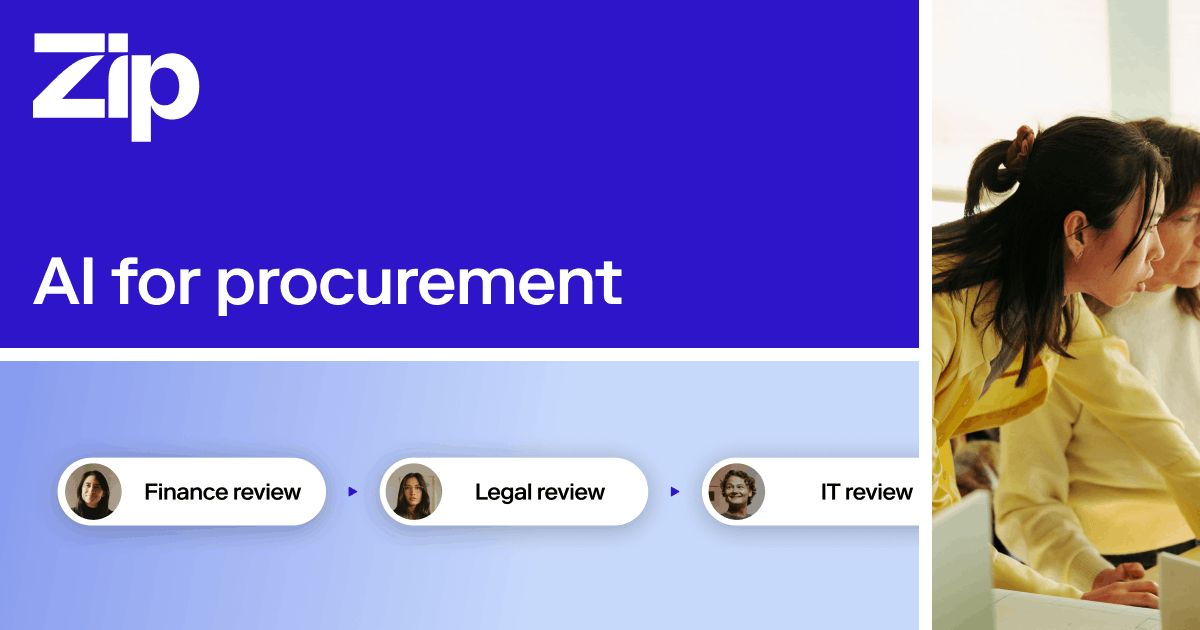
Every proposal sent to a mid-market or enterprise buyer lands inside a procurement process the seller never sees. Understanding what happens there explains a great deal about why well-received proposals still stall for six weeks. Zip is the platform running that process at many large organisations.
Described by the company as the world's leading AI platform for procurement, orchestrating every request from intake to pay, Zip guides employees through purchase requests while enforcing policy, then routes each one through finance, legal, security and vendor risk. For sellers, the practical lesson is that a proposal is assessed by several functions with different questions, and material that answers all of them moves faster than material addressed only to the champion.
- Intake-to-procure: Requests guided and policy enforced from the first internal submission onward.
- Contract orchestration: AI-assisted contract automation including redline handling.
- Risk and supplier onboarding: Third-party risk assessment and vendor onboarding automated rather than handled ad hoc.
Sellers who want to understand what happens on the buying side can see how it runs at zip.com.
With a SendNow Microsite, you can combine:
- Cover letter — a personalized welcome message that sets context
- Proposal PDF — your main document, gated or ungated
- Case studies — relevant social proof matched to the prospect's industry
- Pricing sheet — a standalone one-pager for quick reference
- NDA gate — the prospect must sign an NDA before accessing sensitive materials
All of this lives at one clean, branded link like sendnow.live/your-company/acme-proposal — no attachment, no login friction, no scattered files in email threads.
The engagement analytics advantage is decisive. Unlike a PDF sent over email, a Microsite gives you page-level engagement data across every asset inside it. You can see:
- Which documents the prospect opened (and which they skipped)
- Exactly how long they spent on each page of the proposal
- Whether they forwarded the link to colleagues (and who)
- Which sections triggered the most re-reads — a reliable indicator of purchase intent
This intelligence feeds directly into your follow-up. Instead of "Just checking in…", your rep calls and says: "I noticed you spent the most time on our pricing sheet — did you want to walk through the Enterprise tier?" That's a conversation a PDF can't enable.
SendNow Microsites are available from the $17/month Pro plan. Teams on the Business plan ($43/month) get multi-member access, advanced analytics, and the ability to build Microsites for multiple clients simultaneously. No credit card required to start a free trial.
Which proposal management software is best for small teams?
For teams of 1-5 people, three criteria dominate the decision: ease of setup, total cost, and whether the tool fits an existing workflow.
For teams that create proposals from scratch: Proposify and Better Proposals offer the best balance of template quality and affordable pricing for small teams. Both have intuitive editors and a library of pre-built templates covering most common proposal types.
For teams focused on tracking engagement after sending: SendNow is the strongest option. It adds page-by-page analytics, AI engagement scoring, real-time notifications, and branded deal rooms to any document you share — whether that document was built in the platform itself or uploaded from another tool. At $17/month, it is the most cost-efficient entry point for adding proposal intelligence without switching creation tools.
For teams that need creation, tracking, and e-sign in one place: PandaDoc covers the full workflow and integrates with most common CRMs. It is the most widely adopted platform in this category for a reason: the feature set is comprehensive and the onboarding curve is manageable for small teams.
How does proposal software speed up the sales cycle?
Proposal software reduces cycle time through three specific mechanisms.
First, it reduces creation time. Templates and content libraries eliminate the hours spent rebuilding proposals from scratch for each prospect. GetAccept notes that removing manual proposal friction is one of the most direct ways to compress the time between discovery and close.
Second, it compresses the review-to-signature window. Interactive pricing and built-in e-sign remove the "I need to print this, sign it, scan it, and email it back" delay. The prospect signs in the same session they review the proposal.
Third, it improves follow-up timing. Real-time engagement notifications tell the rep when a prospect is actively viewing the proposal. A phone call made within 60 seconds of a proposal open reaches a far more engaged buyer than a check-in email sent two days later.
Proposify's own research identifies e-signature and real-time engagement visibility as the two proposal features most correlated with higher close rates.
Did DocSend remove its free plan?
Yes. DocSend, owned by Dropbox, removed its free plan in March 2025. Teams previously using DocSend's free tier for basic document sharing and link tracking now need to pay for a plan starting at $45/user/month, or find an alternative.
This change accelerated interest in alternatives that offer comparable functionality at lower price points. SendNow is among the most direct alternatives, offering page-by-page document analytics, branded deal rooms, NDA gating, real-time Slack notifications, screenshot protection, and AI engagement scoring starting at $17/month — with no credit card required to start a free trial.
For financial advisors, agencies, and sales teams that relied on DocSend's free tier, the cost-to-feature comparison has shifted significantly in favor of newer platforms built specifically around analytics and deal room workflows.
Proposal Management Software Pricing Comparison 2026
| Tool | Starting Price | Proposal Builder | Page Analytics | NDA Gate | Microsite | eSign | Free Trial |
|---|---|---|---|---|---|---|---|
| SendNow | $17/mo | ✅ Upload & share | ✅ Per-page | ✅ Yes | ✅ Yes | ❌ Via integration | ✅ No card |
| PandaDoc | $19/user/mo | ✅ Full editor | ✅ Basic | ❌ No | ❌ No | ✅ Yes | ✅ 14-day |
| Proposify | $49/user/mo | ✅ Full editor | ✅ Section-level | ❌ No | ❌ No | ✅ Yes | ✅ 14-day |
| Qwilr | $35/user/mo | ✅ Web pages | ✅ Yes | ❌ No | ❌ No | ✅ Yes | ✅ 14-day |
| GetAccept | $25/user/mo | ✅ Full editor | ✅ Yes | ❌ No | ❌ No | ✅ Yes | ✅ Yes |
| DocSend | $45/user/mo | ❌ Upload only | ✅ Per-page | ✅ Yes | ❌ No | ❌ No | ❌ No |
| Better Proposals | $19/mo | ✅ Full editor | ✅ Basic | ❌ No | ❌ No | ✅ Yes | ✅ Yes |
SendNow is the only platform that combines per-page analytics, NDA gating, and Microsites at under $20/month. Compare all plans →
The 8 Best Proposal Management Software Tools in 2026
1. PandaDoc — Best All-in-One Proposal Builder
Best for: Sales teams that need proposal creation, e-signature, and CRM integration in a single platform.
PandaDoc is the most widely adopted proposal management platform in the mid-market. It includes a drag-and-drop editor, a template library of 750+ designs, dynamic pricing tables, built-in e-sign, payment collection, and integrations with Salesforce, HubSpot, and Pipedrive. Its content library lets reps reuse approved sections without starting from scratch.
GetAccept's 2026 review places PandaDoc among the top three platforms for teams prioritizing proposal creation quality and workflow automation.
Pricing: Essentials from $19/user/month. Business from $49/user/month. Enterprise custom.
2. Proposify — Best for Agency and Services Proposals
Best for: Agencies, consultants, and professional services firms with high proposal volume and brand consistency requirements.
Proposify's editor gives teams granular control over proposal design, with pixel-perfect layouts, interactive pricing, approval workflows, and a content library that enforces brand standards. Its analytics show proposal open rates, time spent per section, and close rates by proposal type.
Pricing: Team plan from $49/user/month. Business custom.
3. SendNow — Best for Proposal Analytics and Secure Deal Rooms
Best for: Sales reps and revenue teams who need deep engagement intelligence on every proposal they send.
SendNow is a secure document sharing and analytics platform that adds page-by-page engagement data, AI engagement scoring, real-time open notifications, and branded deal rooms to any proposal you share. NDA gating protects sensitive pricing before prospects access the document. Screenshot protection and dynamic watermarks secure confidential content after they do.
Unlike traditional proposal builders, SendNow focuses on what happens after the proposal is sent — giving reps the engagement intelligence to follow up with exactly the right message at exactly the right moment. SendNow's Microsite feature lets you bundle your proposal with case studies, pricing sheets, and NDAs in one branded URL, while file tracking gives you per-page analytics on every document you share.
Pricing: Pro $17/month (1 member, 300 documents), Business $43/month (3 members, 1,000 documents), Enterprise custom. 35% off annual. Free trial, no credit card required. View full pricing →
4. Qwilr — Best for Interactive, Web-Based Proposals
Best for: Teams that want proposals that look and behave more like a modern webpage than a PDF, with interactive pricing and embedded video.
Qwilr converts proposals into interactive web pages that prospects can view on any device without downloading a file. It includes interactive pricing options, video embeds, e-sign, and engagement tracking. The visual output is among the most polished in the category.
Pricing: Business from $35/user/month. Enterprise from $59/user/month.
5. GetAccept — Best for Digital Sales Rooms
Best for: B2B sales teams that want to combine proposal delivery, contract signing, video messaging, and buyer collaboration into a single deal room.
GetAccept's digital sales room approach keeps all deal-related content, communication, and signatures in one shared space for the buyer and seller. GetAccept's own research shows that removing friction from the proposal-to-signature workflow directly reduces sales cycle length.
Pricing: Essential from $25/user/month. Professional from $49/user/month.
6. Better Proposals — Best for Budget-Conscious Small Teams
Best for: Freelancers and small teams that need professional proposal output at the lowest price point in the category.
Better Proposals provides a straightforward template editor, e-signature, and basic open tracking. The template library covers most common use cases for agencies, consultants, and service businesses. The $19/month entry point makes it accessible for solo operators and early-stage teams.
Pricing: Starter from $19/month. Premium from $29/month.
7. DocSend — Best for Enterprise Document Distribution
Best for: Enterprise sales teams at larger organizations with existing Dropbox infrastructure who need document analytics at scale.
DocSend, now owned by Dropbox, remains a widely recognized brand in document tracking with strong enterprise sales room features, NDA gating, and visitor analytics. Note that DocSend removed its free plan in March 2025, making it a less viable option for cost-conscious SMBs. Plans now start at $45/user/month.
Pricing: Personal from $15/month (limited features). Standard from $45/user/month. Advanced and Enterprise from $150/user/month.
8. HubSpot Proposals — Best for Teams Already in HubSpot
Best for: HubSpot CRM users who want proposal creation and tracking inside their existing workflow without a third-party integration.
HubSpot's document tools within Sales Hub allow teams to share tracked links, see when contacts open documents, and correlate document engagement with deal activity in the CRM. It is not as feature-rich as dedicated proposal builders, but the native CRM integration makes it the path of least resistance for teams already committed to the HubSpot ecosystem.
Pricing: Included in Sales Hub Starter ($20/user/month) and above.
Conclusion: The Right Proposal Tool Closes the Visibility Gap
Every proposal sent without engagement analytics is a deal you're managing blind. You don't know if the prospect read it, shared it internally, or sent it straight to the trash. The right proposal management software eliminates that blind spot.
If you already have a proposal creation process and your primary gap is post-send visibility — knowing which pages held attention, when to follow up, and how serious each prospect actually is — SendNow delivers that intelligence faster and more affordably than any enterprise alternative.
Page-by-page analytics, AI engagement scoring, NDA gating, branded deal rooms, screenshot protection, and real-time Slack notifications, starting at $17/month with no credit card required. Start your free trial and send your next proposal with the full picture of what happens after it lands.
Frequently Asked Questions
What is the best proposal software for small teams?
For small teams (1–5 people), the best proposal software depends on your biggest bottleneck. If you need a polished proposal builder, Proposify and Better Proposals are the top picks — both have strong templates and affordable pricing. If your gap is post-send intelligence (knowing when the proposal was opened and which sections the prospect read), SendNow at $17/month is the strongest value in the category. It works with any document type, requires no complex onboarding, and gives you page-by-page engagement data from day one.
Is DocSend good for proposals?
DocSend is good for document tracking at enterprise scale, but it removed its free plan in March 2025 — making it far less accessible for small and mid-sized teams. Plans now start at $45/user/month. For teams looking for comparable per-page analytics, NDA gating, and real-time notifications at a fraction of the cost, SendNow ($17/month) is the most direct alternative, with the added advantage of Microsites for bundling full deal packages in one branded URL.
Can I track who read my proposal and which sections they spent time on?
Yes — with the right tool. Platforms like SendNow and DocSend offer per-page engagement analytics, meaning you can see exactly how many seconds a prospect spent on each page of your proposal. SendNow's file tracking also tells you if the link was forwarded to a colleague, how many total sessions the document received, and when the highest-engagement reading session happened. This data makes follow-up conversations precise instead of generic.
What is the difference between a Microsite and a proposal link?
A proposal link gives your prospect access to a single document — typically a PDF or interactive page. A Microsite bundles multiple assets (cover letter, proposal PDF, case studies, pricing sheet, NDA) into one branded URL, presenting them in a structured, navigable experience. SendNow Microsites go further by tracking engagement across every asset in the bundle, so you know not just that the prospect visited — but exactly what they read and in what order. For complex B2B deals, a Microsite converts a proposal into a complete buying experience.
How do I know when a client opens my proposal?
Any document shared via SendNow generates a real-time notification the moment a prospect opens it. You can receive this alert via email, Slack, or webhook — so reps can follow up within minutes of the open, at the highest point of prospect attention. The platform also shows you repeat visits, session duration, and device type, giving you a full picture of buyer engagement before you make a single call.
What is the best free proposal tracking tool?
There is no fully-featured free proposal tracking tool in 2026 — DocSend removed its free plan in March 2025, and most platforms with meaningful analytics require a paid plan. The most accessible starting point is SendNow's free trial (no credit card required), which gives you access to page-by-page tracking, NDA gating, and real-time open notifications before you commit to the $17/month Pro plan. For teams that need tracking without any creation overhead, SendNow's trial is the best risk-free starting point in the category.
Do I need e-signature in my proposal software?
It depends on your deal velocity. If your proposals typically close in a single session — the prospect reads, decides, and signs — built-in e-sign is a meaningful convenience. If your proposals go through internal review cycles on the buyer side before signature, the e-sign feature may matter less than analytics. Many teams use a dedicated e-sign tool (DocuSign, Adobe Sign) for contract execution and a separate analytics layer (SendNow) for proposal intelligence. The two workflows don't have to live in the same platform.
What CRMs integrate with proposal management software?
Most major proposal platforms integrate with Salesforce, HubSpot, and Pipedrive. PandaDoc offers the deepest CRM integrations, including native Salesforce and HubSpot connections that sync proposal status, e-sign events, and engagement data directly into deal records. SendNow supports webhook-based integrations, allowing teams to push open notifications and engagement events into any CRM via Zapier or a direct API connection. For HubSpot-native teams, HubSpot's own document tools provide basic tracking without any third-party setup.
Ready to send your next proposal with full engagement intelligence? Start your free SendNow trial — no credit card required →
Explore SendNow Microsites · File Tracking · Pricing
Keep Reading
About the Author: Rifana Hameem
Rifana is the founder of SendNow. She leads the team in building secure, compliant, and analytics-rich document sharing tools for finance and professional teams worldwide.
Connect on LinkedIn